
In today’s workplace, boardroom, or even at the dinner table, one phrase still quietly undermines confident women: “She must be on her period.” What seems like a throwaway comment is actually part of a larger pattern that dismisses and diminishes female strength. This article dives into how the so-called “period excuse” became a tool used to invalidate women’s emotions, leadership, and decision-making. The question at the heart of this story is simple: Is this just cultural conditioning, or is there real science behind the claim that women are irrational during their menstrual cycle? The answer—grounded in research, not opinions—may surprise you.
Table of Contents:
- The Origins of the “Period Excuse”
- Science vs. Stereotype: What Hormones Actually Do
- Workplace Impact: The Silent Undermining of Authority
- The Data Behind the Dismissal
- Media and Pop Culture: Reinforcing the Myth
- Fighting Back with Facts
- FAQs: Addressing Common Misconceptions

The Origins of the “Period Excuse”.
Historically, menstruation has been misunderstood and stigmatized across many cultures. In ancient Greece, Hippocrates believed the womb wandered throughout a woman’s body, causing hysteria—a term still rooted in the Greek word for uterus (“hystera”). Fast forward to the Victorian era, when women were routinely diagnosed with “nervous disorders” and advised to rest during their “time of the month,” effectively removing them from public life.
The “period excuse” isn’t new—it has evolved from ancient medical fallacies into modern-day gaslighting. Now, instead of doctors sidelining women, it’s coworkers, bosses, and even friends subtly implying that emotional expression equals instability. This long history has embedded itself in everyday language, reducing legitimate reactions to hormonal overreactions.
Science vs. Stereotype: What Hormones Actually Do.
The argument often thrown around is that women become emotionally erratic during their menstrual cycle. But does science actually support that?
According to a 2020 study published in Nature Reviews Endocrinology, while hormonal changes during the menstrual cycle can influence mood and energy levels, these effects are generally mild and vary widely between individuals. In fact, the same review emphasized that many women report feeling more clear-headed and productive during parts of their cycle.
A 2019 article from the Journal of Women’s Health noted:
“There is no consistent, reproducible evidence suggesting a decline in cognitive performance or rational decision-making throughout the menstrual cycle.”
So, why does the myth persist? Because it’s easier to blame biology than to face systemic biases that challenge the status quo. The result is a dangerous oversimplification: a woman who stands her ground is “emotional,” while a man doing the same is “assertive.”

Workplace Impact: The Silent Undermining of Authority.
Women in leadership positions often report that their decisions are second-guessed in subtle, coded ways. In a 2023 survey by Lean In and McKinsey & Company, 48% of women in leadership roles said they’ve had their authority questioned more than their male counterparts—often with remarks tied to mood or emotional tone.
In industries like tech and finance, where female representation is already lower, this stereotype becomes particularly harmful. Dismissing assertive behavior as hormone-driven undermines credibility and slows career progression.
The effect isn’t just personal—it’s economic. The World Economic Forum estimates that gender parity in the workforce could add $28 trillion to the global GDP by 2025. Undermining women on the basis of outdated myths hurts not only individuals but economies at large.
The Data Behind the Dismissal:
A 2022 study by the American Psychological Association found that men and women experience mood swings at similar rates, but women’s emotional states are more likely to be attributed to hormones, whereas men’s are explained by external circumstances like stress or lack of sleep.
Real-Time Insight:
Google Trends data from the last 12 months shows that the search term “Are women more emotional during their period?” peaked during Women’s History Month in March—highlighting a continued interest (and confusion) surrounding this issue.
Similarly, a 2023 survey conducted by YouGov in the U.S. revealed that:
- 63% of men believe PMS affects a woman’s ability to make rational decisions.
- Only 31% of women agreed with that statement.
This dissonance underscores how perception, not science, fuels the myth.
Media and Pop Culture: Reinforcing the Myth:
From sitcoms to movie scripts, the “period excuse” has become a go-to gag. A female character expresses frustration or stands her ground, and another character (usually male) quips, “Is it that time of the month?”—audience laughter follows.
Even children’s shows aren’t immune. An analysis by Common Sense Media found that gendered emotional tropes appear in 72% of popular tween TV shows, subtly teaching girls to second-guess their emotions.
These depictions train audiences from a young age to view women’s assertiveness as hormonal, not rational—a stereotype with long-lasting effects.
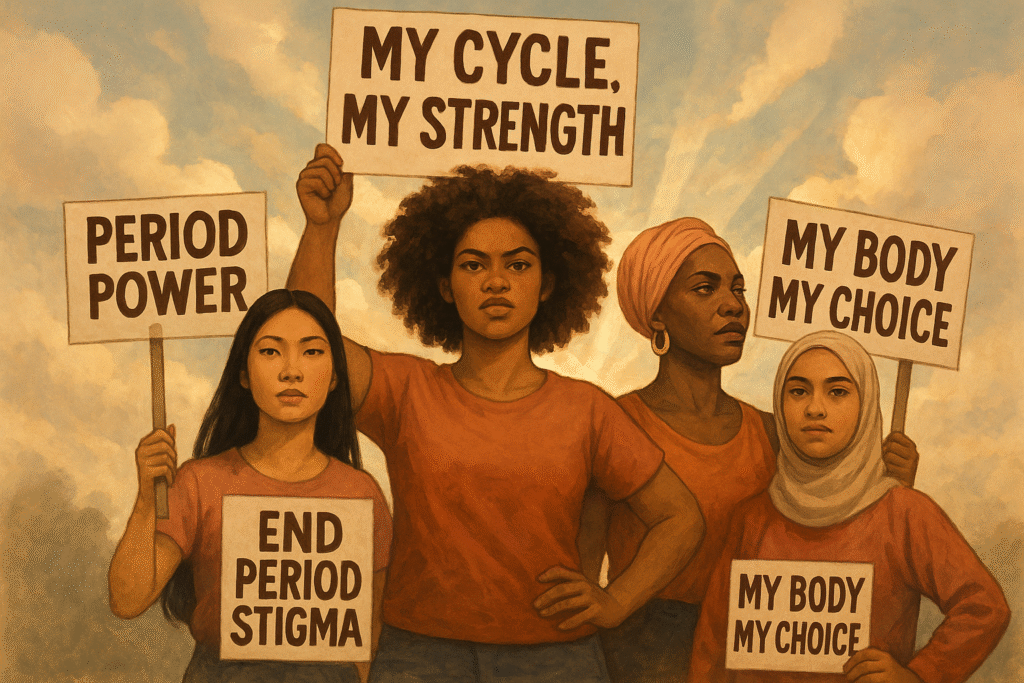
So, what’s the path forward? It starts with replacing assumptions with education.
- Workplace training programs should directly address gender bias and include modules on menstrual stigma.
- Schools must update sex education curriculums to reflect current science about menstrual health, not 20th-century myths.
- Individuals need to challenge their own internalized beliefs—ask: Would I say the same thing if a man behaved this way?
Several platforms are now working to shift the narrative. Apps like Clue and Flo, which track menstrual cycles, are partnering with researchers to destigmatize menstruation through real-time health data and open dialogue. Meanwhile, online forums such as Reddit’s r/TwoXChromosomes are empowering women to share personal stories of bias and push back.
FAQs: Addressing Common Misconceptions.
Q1: Do all women experience mood swings during their period?
No. Every woman’s experience is different. While some may feel more emotional, others feel no noticeable change at all.
Q2: Can a woman lead effectively while on her period?
Absolutely. Research shows no decline in cognitive ability or leadership capacity during menstruation.
Q3: Is there any legal protection against this kind of gendered bias?
Yes, under most employment laws in the U.S., discrimination based on gender-based stereotypes can be grounds for legal action.
Q4: Why is this stereotype still so common?
Cultural conditioning, outdated science, and media portrayals all contribute. It takes active effort to unlearn these biases.
The “period excuse” isn’t just lazy thinking—it’s a quiet form of sexism dressed up as pseudo-science. It’s time to replace the snide remarks with solid facts and empathy. Because when strong women speak up, they’re not being irrational. They’re being heard.
Let’s stop weaponizing biology. Let’s start listening better.
Pingback: “Women Talk Too Much” — Let’s Examine What the Latest Studies Say - blogophobia.com