
What if the Addiction Isn’t Entirely Yours?
She checks her phone before brushing her teeth. He scrolls through TikTok until his eyes blur. They all swear they’re in control — yet somehow, hours vanish. While most blame a lack of discipline, the real question is deeper: Is phone addiction a personal failure, or a designed outcome?
This article explores the hidden systems — from persuasive technology to corporate psychology — that keep us hooked. And more importantly, it offers strategies to break free. Because maybe it’s not you. Maybe the strings are just being pulled a little too well.
The Statistics Don’t Lie: You’re Not Alone in This
Smartphone addiction is no longer anecdotal — it’s measurable, and it’s global. According to DataReportal’s 2024 Digital Report, the average user now spends 6 hours and 37 minutes daily on the internet, with nearly 3 hours dedicated solely to mobile apps (source). Among Gen Z, the numbers spike higher — over 30% check their phones within 5 minutes of waking up.
Google Trends shows a consistent rise in searches for “how to stop being addicted to my phone” over the last 3 years. This isn’t just personal. It’s a collective crisis.
Designed to Be Irresistible: The Science of Persuasive Tech
It’s not just about dopamine — it’s about deliberate design. Major tech companies employ behavioral psychologists and attention engineers to make digital experiences addictive. Features like infinite scroll, “likes,” push notifications, and streaks aren’t neutral — they’re rooted in operant conditioning (like the system used in slot machines).
Tristan Harris, former Google Design Ethicist and founder of the Center for Humane Technology, famously warned:
“Your phone is not a tool. It’s a slot machine in your pocket.”
Apps are engineered to trigger variable reward loops — meaning you keep coming back, not knowing when the reward will hit. This technique isn’t exclusive to games or social media — even productivity apps use it.
Related NLP entities: digital dopamine, habit loops, infinite scroll, tech addiction psychology
Is It Really You That’s Addicted — Or Is It Manipulated Behavior?
When someone says they’re addicted to their phone, it’s easy to frame the problem as self-inflicted. But that removes accountability from designers, algorithms, and ad-tech systems that profit from your time.
What feels like a personal failure is often algorithmic influence, perfectly tailored to each user’s behavior. The YouTube autoplay feature, Instagram Explore tab, or TikTok’s “For You Page” aren’t just content filters — they are predictive engagement systems trained to exploit your weaknesses.

The Hidden Cost: Mental Health, Sleep, and Social Disconnection
Being addicted to your phone isn’t just a time issue — it’s a mental health and lifestyle crisis.
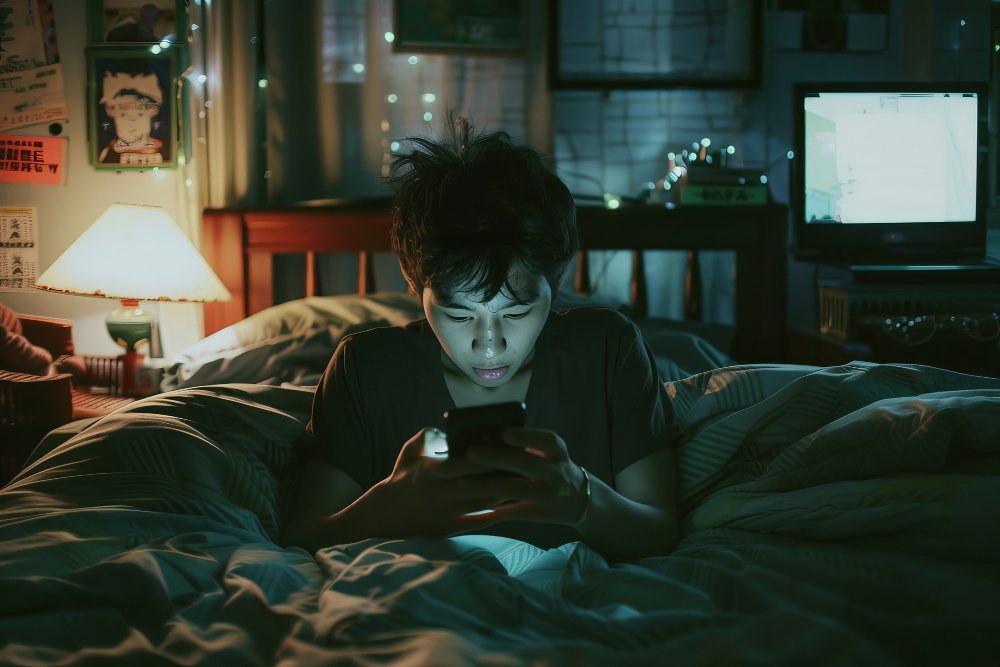
- Sleep disruption: Studies by the Sleep Foundation show that over 70% of people who use phones before bed experience reduced sleep quality.
- Anxiety and FOMO: The more we scroll, the more we compare.
- Reduced attention span: A Microsoft study found that the average attention span dropped from 12 seconds in 2000 to just 8.25 seconds in 2023.
It’s not just digital burnout. It’s physiological rewiring.
Breaking Free: Strategies That Actually Work
Instead of quitting cold turkey, the solution lies in intentional boundaries. Here’s what experts recommend:
Scheduled Downtime
Use Screen Time (iOS) or Digital Wellbeing (Android) to limit non-essential app usage. Set app timers for Instagram, YouTube, or TikTok to just 30 minutes a day.
Kill the Notifications
Push notifications are mini interruptions that manipulate your urgency response. Turn off everything non-essential — especially badges, previews, and vibrate modes.
Tech-Free Zones
Designate areas of your house as “phone-free,” like the dining table, bedroom, or bathroom.
Use Phones as Tools, Not Toys
Move non-entertainment apps like Google Calendar or Google Sheets to your home screen. Hide entertainment apps deep in folders.
Mindfulness Over Multitasking
Try practices like mindful scrolling or single-app focus to reprogram your engagement habits.
These are not quick fixes, but they are sustainable steps toward balance.
Corporate Responsibility: Should Tech Be Regulated?
Many advocates now argue that phone addiction is a public health issue, not just a personal habit. Governments and tech watchdogs are urging companies to implement:
- Ethical design practices
- Age-based content restrictions
- Built-in usage warnings
- Mandatory app usage transparency
Countries like France have banned smartphones in schools. Meanwhile, companies like Apple and Google now offer “focus” features — but critics argue these are just opt-in band-aids, not true systemic change.
The question becomes: Why should the burden of discipline fall entirely on users when platforms are designed for compulsion?
The Bottom Line: You’re Not the Problem — The System Is
Being addicted to your phone doesn’t make you weak. It makes you human in a profit-driven attention economy.
The solution isn’t just deleting apps. It’s about reclaiming intention in a world designed for distraction. When people understand that their behavior is shaped by systems built to override autonomy, they can make more conscious choices — not perfect ones, but better ones.
It’s time to shift the narrative:
From “I have no self-control” to “I was trained to behave this way — and I can untrain it.”
Frequently Asked Questions (FAQ)
Is phone addiction a real medical condition?
Yes. The term “problematic smartphone use” is increasingly being recognized in behavioral health circles, although it is not yet an official diagnosis in DSM-5. However, its impact on mental health is well-documented.
Can screen time limits actually reduce addiction?
Yes. Screen time limits help raise awareness of usage patterns and create intentional boundaries, which are crucial first steps in behavior change.
What apps help reduce phone usage?
Apps like Forest, Freedom, One Sec, and Digital Detox help users reduce screen time by adding friction or rewards to the process.
Are kids more vulnerable to phone addiction?
Absolutely. Children and teens have developing brains and are more susceptible to dopamine-driven reward loops, making them highly vulnerable to screen-related overuse.

Reclaim Your Time — One Intentional Tap at a Time
If your phone is running your day instead of helping it — it’s time to take the first step. Delete one app. Turn off one notification. Set one screen-free hour. That’s not just a digital detox — it’s a revolution in how you live your time.
Share this article with someone who’s ready to take back control — or needs a nudge to see they were never the problem in the first place.
Pingback: How to Make Money Online From Home: 25 Legit Ways for Beginners (No Investment Needed) - blogophobia.com
Pingback: Say Goodbye to Car Troubles: How to Prevent Bad Performance in 5 basic steps? - blogophobia.com