
Table of Contents
- Why You’ll Love This Crab Cake Recipe
- Crab Cake Ingredients
- How to Choose Crab Meat
- How to Make Crab Cakes
- Tips for the Best Crab Cakes
- What to Serve with Crab Cakes
- Crab Cake Variations
- Make-Ahead, Storage & Reheating
- FAQ
- Printable Recipe Card
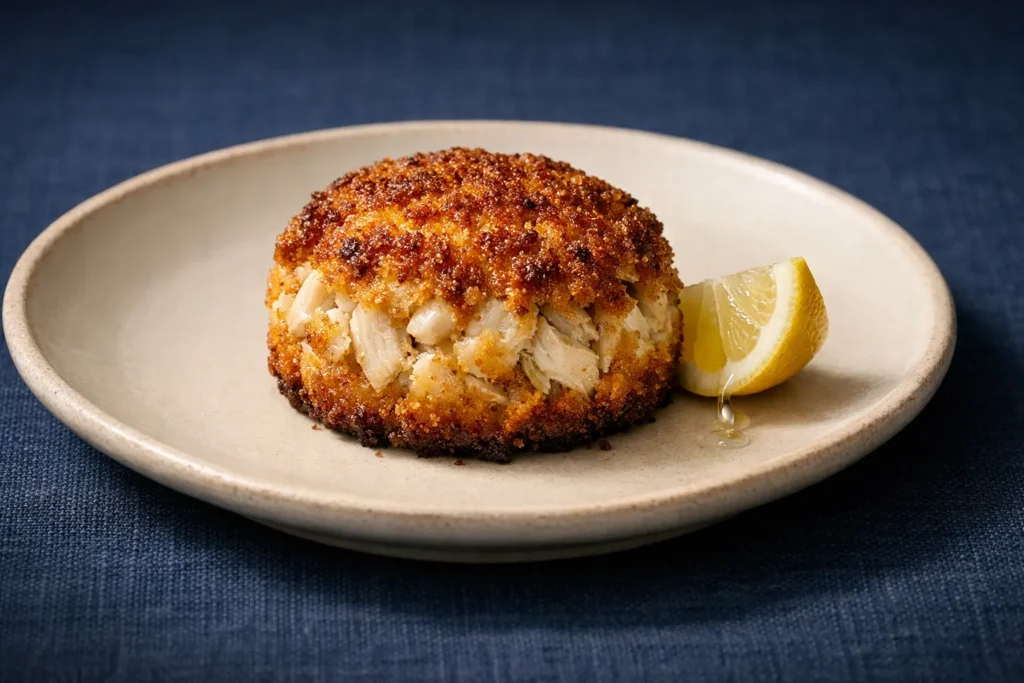
Here on the Chesapeake, a great crab cake is practically a religion — and most restaurant versions quietly break your heart. Too much filler, not enough crab, a texture closer to a fish stick than a golden, lump-studded cake that holds itself together just long enough to fall apart in your mouth.
This crab cake recipe fixes all of that. It’s an authentic Maryland crab cake recipe built around real jumbo lump crab meat, a whisper of Old Bay, and barely enough binder to hold things together. You can pan-fry them for a shattering golden crust, bake them for a lighter result, or do a quick combo of both. Either way, you’ll have the best crab cake recipe you’ve ever made at home — and it comes together with just 7 core ingredients.
Included below: a full step-by-step guide, crab meat selection tips, a crab cake sauce recipe, make-ahead instructions, and an FAQ that answers every “how long to cook a crab cake” question you’ve ever Googled at 6pm.
1. Why You’ll Love This Crab Cake Recipe
- Minimal filler : crab is the star, not breadcrumbs
- Authentic Maryland crab cake recipe : Old Bay, Dijon, and lemon do the heavy lifting on flavor
- Baked or pan-fried : instructions for both methods so you get the texture you want
- Make-ahead friendly — form the cakes up to 24 hours in advance
- Easy crab cake recipe — 15 minutes of prep, 30 minutes of chilling, and under 10 minutes to cook
2. Crab Cake Ingredients
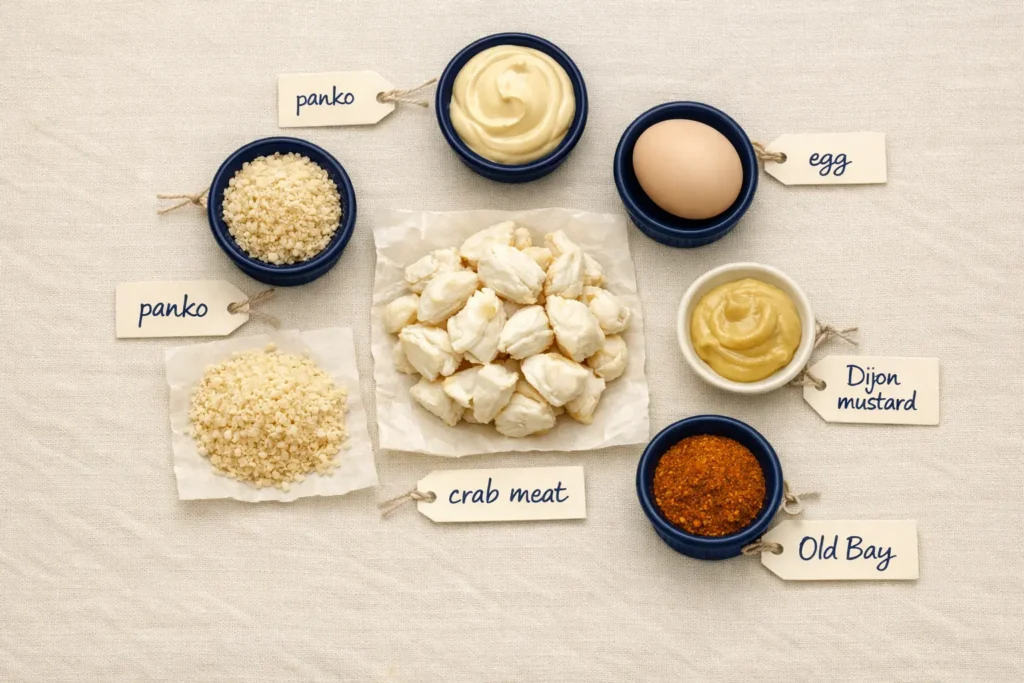
Besides the crab, this simple crab cake recipe uses just 6 pantry staples. Here’s what’s in a crab cake and why each ingredient earns its spot:
- Jumbo lump crab meat (1 lb): the centerpiece of any lump crab cake recipe. Jumbo lump comes from the two swimming muscles of the blue crab and produces the largest, meatiest chunks. It’s pricier, but it’s what separates a great crab cake from a mediocre one.
- Mayonnaise (¼ cup): binds the cake while adding richness and moisture. Don’t skip it and don’t substitute Greek yogurt here.
- Egg (1 large): secondary binding agent that helps the cakes hold their shape during cooking.
- Panko breadcrumbs (¼ cup): the minimal filler that keeps things from falling apart. Panko is lighter and crispier than regular breadcrumbs. Crushed saltines are a traditional Old Bay crab cake recipe alternative and work beautifully.
- Old Bay seasoning (1 tsp):the Maryland crab cake’s non-negotiable. Celery salt, paprika, and a blend of spices that exist specifically for this moment.
- Dijon mustard (1 tsp): adds a gentle tang and depth that rounds out the seafood flavor.
- Worcestershire sauce (½ tsp): a quiet umami layer that makes the whole cake taste more savory.
- Fresh parsley (2 tbsp, chopped): brightness, color, and freshness.
- Lemon juice (1 tsp): a little acid lifts every other flavor in the cake.
- Optional: Finely diced celery, sliced green onion, a dash of hot sauce, or a pinch of cayenne for heat lovers.
- Butter and oil (for cooking): the combination produces the best golden crust with excellent heat control.
Pro Tip: Always pick through your crab meat for any shell fragments before using. Even premium refrigerated tubs occasionally contain small pieces. Do it gently so you don’t break up the lumps.
3. How to Choose Crab Meat
What type of crab meat is best for a crab cake recipe? This question has a clear answer — and a hierarchy.
Jumbo Lump vs. Lump vs. Backfin:
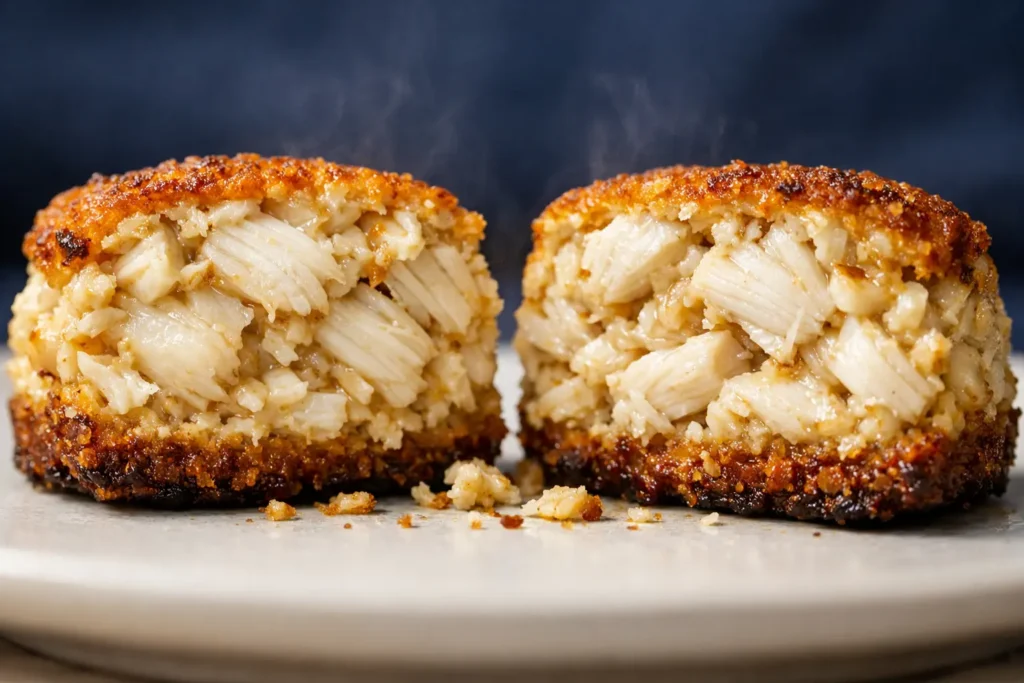
Jumbo lump crab meat consists of large, whole muscle pieces. It’s the gold standard for any lump crab cake recipe because the chunks stay intact during folding and cooking, giving you that impressive, chunky texture.
Lump crab meat is a mix of smaller whole-muscle pieces and broken jumbo lump. It’s an excellent, slightly more affordable option — ideal for an easy crab cake recipe where you want good texture without the premium price tag.
Backfin is flakier and smaller-flaked, pulled from the body cavity. It works in a pinch and is great mixed with lump crab to stretch the recipe, but it won’t give you those dramatic chunks.
Claw meat is the darkest and most strongly flavored. Some recipes use it for a more pronounced crab flavor at a lower cost, but it changes the texture significantly.
Fresh vs. Refrigerated vs. Canned:
- Fresh from a seafood counter: best possible option if available in your area
- Refrigerated pasteurized tubs (found in the seafood section): what most home cooks use, and completely excellent for a Maryland crab cake recipe
- Canned shelf-stable: acceptable only in a pinch; avoid for this recipe if you can
- Imitation crab: not suitable here; it won’t hold together the same way and the flavor is completely different
4. How to Make Crab Cakes
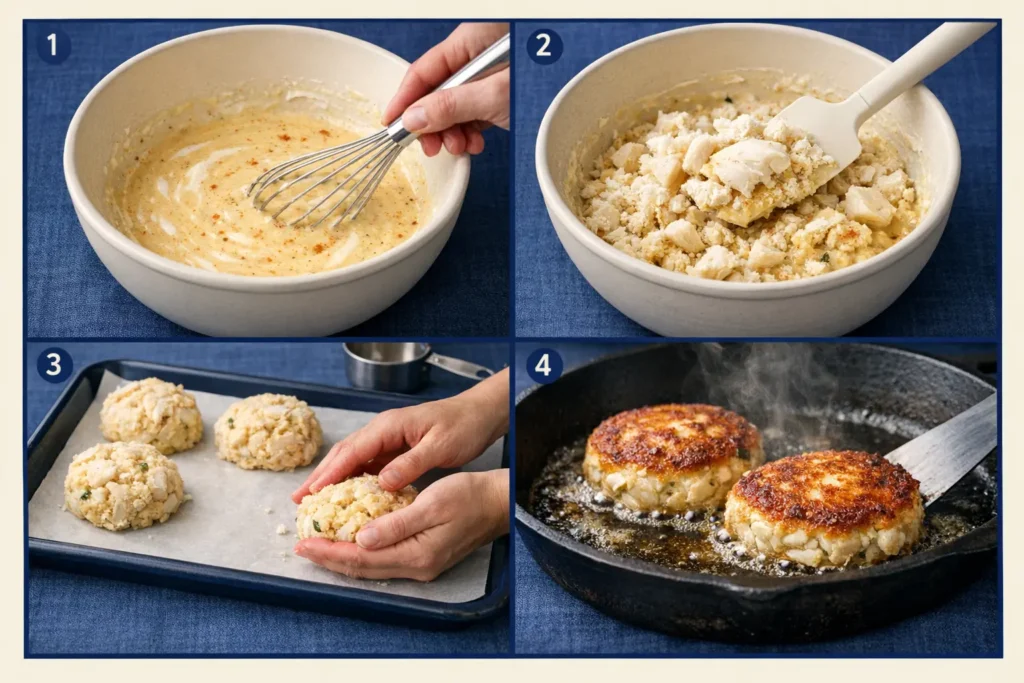
Step 1: Make the wet base.
In a large bowl, whisk together the mayonnaise, egg, Dijon mustard, Worcestershire sauce, Old Bay seasoning, chopped parsley, lemon juice, and a pinch of salt and black pepper. Whisk until smooth and fully combined.
Step 2: Fold in crab and breadcrumbs.
Add the crab meat and panko breadcrumbs to the bowl. Using a rubber spatula or your hands, fold gently — you want everything just combined. The key to a great crab cake recipe easy enough for weeknights is not overmixing. Overmixing breaks down the lumps and makes the cakes dense and mushy.
Step 3: Shape into patties.
Using a ⅓-cup measuring cup or large cookie scoop, portion the mixture into 6–8 mounds on a parchment-lined baking sheet. Shape them gently into thick round patties — about 1 inch tall. Don’t press them flat.
Step 4: Chill.
Cover the baking sheet with plastic wrap and refrigerate for at least 30 minutes, and up to 1 hour. This step is critical — it’s how you make a crab cake that actually holds together in the pan. Don’t skip it.
Step 5: Cook.
Choose your method:
- Pan-fry (recommended): Heat 2 tablespoons of butter and 1 tablespoon of neutral oil in a large non-stick or cast iron skillet over medium-high heat. Cook crab cakes 3–5 minutes per side until deeply golden. Don’t move them until they release naturally. This is how to cook a crab cake for maximum crust.
- Bake: Brush cakes with melted butter and bake at 450°F (230°C) for 12–14 minutes until golden. This is how to bake a crab cake for a lighter result.
- Combo (best of both): Sear 2 minutes per side in an oven-safe skillet, then transfer to a 400°F oven for 8–10 minutes. This is how to cook a crab cake in the oven while keeping the crust.
Step 6: Serve.
Immediately with lemon wedges and your sauce of choice. See the sauce section below.
Pro Tip: The crab is already cooked — you’re just building a crust and warming the inside. Don’t overcook. Once the outside is golden, you’re done.
5. Tips for the Best Crab Cakes
- Handle them gently: The more you work the mixture, the more you break down the lumps. Fold, don’t stir.
- Don’t skip the chill: Cold cakes hold their shape. Warm cakes fall apart. 30 minutes minimum.
- Keep them tall: Don’t press the mounds flat — taller cakes have a better texture ratio of crust to interior.
- Monitor your heat: If the pan is too hot, the outside burns before the interior warms through. Reduce heat slightly after the first 90 seconds if browning too fast.
- If they’re falling apart: Add one more egg to the mixture, or press gently from the sides after shaping and chill longer.
- Don’t crowd the pan: Leave at least 1 inch between each cake so steam escapes and you get a proper crust.
6. What to Serve with Crab Cakes
A classic crab cake sandwich starts with a brioche bun, a schmear of tartar sauce, and crisp lettuce. But these cakes work beautifully in dozens of configurations.
Sauces:
- Classic tartar sauce — the most traditional pairing
- Remoulade or spicy garlic aioli
- Lemon dill yogurt sauce
- For your crab cake sauce recipe: mix ½ cup mayo, 2 tbsp Dijon, 1 tbsp capers, 1 tbsp lemon juice, and fresh dill to taste. Done.
Sides:
- Creamy coleslaw or vinegar slaw
- Old Bay potato salad
- Caesar salad or peppery arugula with lemon vinaigrette
- Corn salad with peppers and lime
- Roasted asparagus or broccolini
- Hush puppies or cornbread
For brunch: Try a crab cake benedict — swap the Canadian bacon for a warm crab cake, poach your eggs, and spoon hollandaise over the top. A genuinely incredible way to use leftover cakes.
7. Crab Cake Variations
This recipe is flexible. Here’s how to change it up:
- Spicy crab cakes: Add ¼ tsp cayenne or a few dashes of hot sauce to the wet base
- Gluten free: Swap panko for certified gluten-free breadcrumbs or crushed gluten-free crackers
- Different protein: This same technique works for salmon cakes, halibut cakes, or shrimp cakes — just chop the protein into small chunks before mixing
- Herb swaps: Try fresh tarragon, chives, basil, or dill in place of parsley
- Different sauce: Cocktail sauce, sriracha mayo, or a bright avocado crema all work
8. Make-Ahead, Storage & Reheating
Make-ahead: Form crab cakes up to 24 hours in advance and store covered on the baking sheet in the refrigerator. Cook straight from cold.
Storing: Transfer cooked crab cakes to an airtight container. They keep in the refrigerator for up to 3 days.
Freezing: Freeze uncooked or cooked crab cakes individually on a parchment-lined sheet for 1 hour, then wrap each in plastic wrap and store in a zip-lock bag for up to 3 months. Thaw overnight in the fridge before cooking.
Reheating: Place on a foil-lined baking sheet, cover loosely with foil, and warm at 325°F for 10–15 minutes. Alternatively, re-fry in a lightly buttered skillet over medium heat for 2–3 minutes per side. Avoid the microwave — it steams the crust and makes them soggy.
FAQ
Printable Recipe Card
| Prep Time | 15 minutes |
| Chill Time | 30 minutes |
| Cook Time | 8–10 minutes |
| Total Time | ~55 minutes |
| Yield | 6–8 crab cakes |
| Calories | ~230 per cake |
Ingredients
- 1 lb (450g) jumbo lump crab meat, picked over for shells
- ¼ cup (60g) mayonnaise
- 1 large egg
- ¼ cup (25g) panko breadcrumbs (or crushed saltines)
- 1 tsp Old Bay seasoning
- 1 tsp Dijon mustard
- ½ tsp Worcestershire sauce
- 2 tbsp fresh parsley, finely chopped
- 1 tsp fresh lemon juice
- Salt and black pepper to taste
- 2 tbsp unsalted butter + 1 tbsp neutral oil (for pan-frying)
Instructions
- In a large bowl, whisk together mayonnaise, egg, Dijon mustard, Worcestershire sauce, Old Bay, parsley, lemon juice, salt, and pepper until smooth.
- Add crab meat and panko. Fold gently with a spatula until just combined — do not overmix.
- Portion into 6–8 mounds using a ⅓-cup scoop. Shape into thick round patties. Place on a parchment-lined sheet.
- Cover with plastic wrap and refrigerate for at least 30 minutes (up to 24 hours).
- To pan-fry: Heat butter and oil in a large skillet over medium-high heat. Cook cakes 3–5 minutes per side until golden brown. Do not move them until they release on their own.
- To bake: Brush tops with melted butter. Bake at 450°F (230°C) for 12–14 minutes.
- Serve immediately with lemon wedges and tartar sauce or remoulade.
Notes
Crab meat: Jumbo lump is ideal. Regular lump crab meat works well. Avoid shelf-stable canned crab.
Breadcrumbs: Panko or crushed saltines both work. Use certified GF breadcrumbs for gluten-free cakes.
Make-ahead: Form cakes and refrigerate covered up to 24 hours before cooking.
Storing: Airtight container in the fridge up to 3 days. Freeze individually up to 3 months.
Reheating: Oven at 325°F for 10–15 minutes, covered loosely with foil. Or re-fry in a buttered skillet 2–3 minutes per side.
Nutrition (per cake, pan-fried, based on 7 cakes)
| Calories | Protein | Fat | Carbs | Sodium |
|---|---|---|---|---|
| ~230 kcal | 20g | 13g | 6g | 480mg |
Conclusion
Whether you’re after a simple crab cake recipe for a weeknight dinner, a showstopper for guests, or the definitive answer to “what is a crab cake supposed to taste like,” this is the version you’ll come back to. Real crab, minimal filler, a crust that cracks, and a center that stays tender and sweet. That’s it. That’s the whole deal.
Make a batch this weekend and let us know how it goes, leave a star rating below, drop a comment, or tag us on Instagram. We’d love to see yours.