
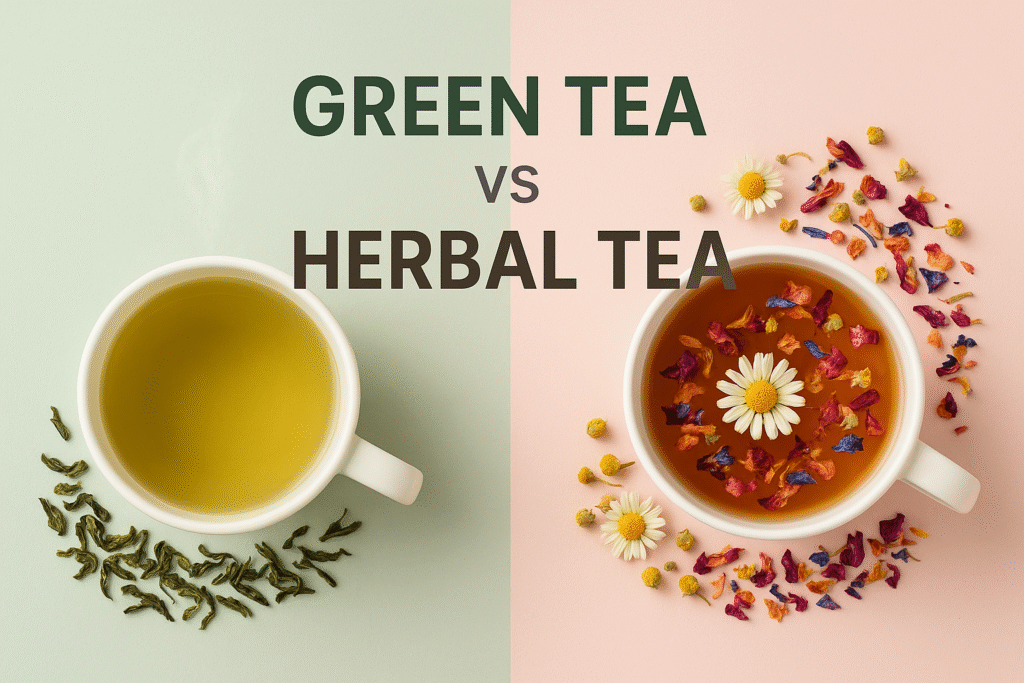
Many people want a simple, natural way to boost energy, reduce stress, and improve overall wellness — but choosing the right tea can feel confusing. Green tea is famous for antioxidants and metabolism support, while herbal tea offers calmness, hydration, and unique plant-based benefits. So the central question becomes: Which tea is truly better for daily health — green tea or herbal tea? This article breaks down the benefits, best uses, and brewing methods so readers can choose the tea that fits their lifestyle.
1. What Makes Green Tea and Herbal Tea Different?
Green tea comes from the Camellia sinensis plant, meaning it contains caffeine, catechins, and antioxidants that support metabolism and brain function.
Herbal tea, however, is made from dried herbs, flowers, fruits, or spices — like chamomile, mint, hibiscus, lemongrass, and ginger — and usually contains no caffeine.
This simple difference leads to two very different experiences: green tea boosts alertness, while herbal tea supports relaxation and digestion.
2. Real-Time Data: What Research Says
A 2024 review in The Journal of Nutritional Biochemistry found that green tea catechins (especially EGCG) may support fat oxidation and metabolic health.
Meanwhile, a 2023 study in Phytotherapy Research reported that herbal teas like ginger and hibiscus may help reduce inflammation and support cardiovascular function.
These findings show that both teas offer strong wellness benefits — but each works differently inside the body.
3. Benefits of Green Tea
Green tea is ideal for those who want a light boost of energy without the crash of coffee. Key benefits include:
- Supports metabolism and fat burning
- Boosts alertness and focus due to gentle caffeine
- Rich in antioxidants like EGCG
- Promotes heart health
- Helps reduce oxidative stress
This makes green tea a good choice for weight-loss routines, clean-diet plans, and anyone needing a mid-morning energy lift.
4. Benefits of Herbal Tea
Herbal teas are caffeine-free and wholesome, making them perfect for evenings, hydration, and stress relief.
Common benefits include:
- Better sleep (chamomile, lavender)
- Improved digestion (mint, ginger)
- Heart-friendly antioxidants (hibiscus)
- Natural hydration
- Soothing for stress and anxiety
Each herbal tea offers a different strength, which is why many people rotate between flavors throughout the day.
5. How to Brew Green Tea Correctly
Green tea can turn bitter if brewed incorrectly. Here’s the simplest method:
Ingredients
- 1 teaspoon green tea leaves or 1 tea bag
- 1 cup water
- Optional: honey, lemon
Method
- Heat water to 75–85°C (not boiling).
- Add the tea leaves and steep for 2 minutes.
- Strain and serve warm.
- Add honey or lemon only after it cools slightly to protect nutrients.
Correct brewing keeps its antioxidants active and flavor smooth.
6. How to Brew Herbal Tea (Any Flavor)
Ingredients
Herbal teas are easier to brew because they don’t get bitter.
- 1 tablespoon dried herbs or 1 herbal tea bag
- 1 cup boiling water
- Optional: mint, ginger, lemon, cinnamon
Method
- Pour boiling water over the herbs.
- Steep for 5–7 minutes.
- Strain if using loose herbs.
- Add optional flavors for extra warmth or freshness.
Herbal teas can also be served cold with ice for a refreshing detox drink.
7. Which One Should You Choose?
- Choose green tea if someone wants gentle energy, metabolism support, and antioxidants.
- Choose herbal tea if they prefer calmness, digestion support, or a caffeine-free drink.
- Many wellness experts recommend using both — green tea during the day and herbal tea at night.
This balanced routine supports weight-loss goals, clean nutrition habits, hydration, and better sleep.
FAQ
Q: Can someone drink green tea and herbal tea in the same day?
A: Yes, they make a great combination — green tea for daytime energy, herbal tea for nighttime relaxation.
Q: Which tea is better for weight loss?
A: Green tea contains catechins that support metabolism, but herbal teas like ginger and hibiscus also help digestion and fat oxidation.
Q: Are there any side effects?
A: Too much green tea can cause caffeine sensitivity. Herbal teas are generally safe unless someone is allergic to specific herbs.
If someone wants an easy daily wellness habit, choosing the right tea can make all the difference. Try starting your day with green tea for clarity and ending your evening with herbal tea for calmness.
For more simple, healthy recipes and science-backed wellness tips, explore our latest blog posts and subscribe to stay updated!