

The Trap in the Thought Spiral :
She thought being a deep thinker made her more prepared, more intelligent, more in control. But over time, her endless analyzing drained her energy, stalled her decisions, and wrecked her confidence. Overthinking is often praised in quiet corners as a kind of mental superpower. But is it really? Or is it silently destroying progress?
This article explores a powerful question: Is overthinking helping or hurting? The answer is clear—what many mistake for strategic thinking is, in fact, a form of self-sabotage. Let’s dive into why.

The Myth of Overthinking as a Strength :
Culturally, overthinking is often disguised as intelligence. “I’m just being thorough,” she tells herself. He delays launching a business because he’s “planning carefully.” But research from the University of Michigan shows that people who overanalyze are 30% more likely to experience anxiety and burnout (source: University of Michigan, 2022).
Overthinking feels productive. It gives a false sense of control. But it often replaces action with paralysis. In a 2023 Harvard Business Review study, executives who leaned into overanalysis during high-pressure moments were 40% more likely to miss key opportunities compared to those who made timely decisions.
LSI keywords used: decision paralysis, overthinking burnout, high-performance psychology
Keyword Focus: is overthinking good or bad
The Neuroscience of an Overactive Brain :
When she lies awake replaying conversations, it’s not because she cares too much—it’s because her amygdala is overstimulated. Overthinking triggers the brain’s stress circuits. According to neuroscientist Dr. Caroline Leaf, constant rumination leads to a rise in cortisol levels, impairing memory, sleep, and immunity.
MRI scans confirm that chronic overthinkers show increased activity in the prefrontal cortex (decision-making center) and decreased connectivity with the limbic system (emotion regulation). That means: the more they think, the worse they feel.
Real-Time Data (2024): A study published in NeuroImage: Clinical found that overthinkers showed brain activity similar to individuals with generalized anxiety disorder, even if they weren’t clinically diagnosed.
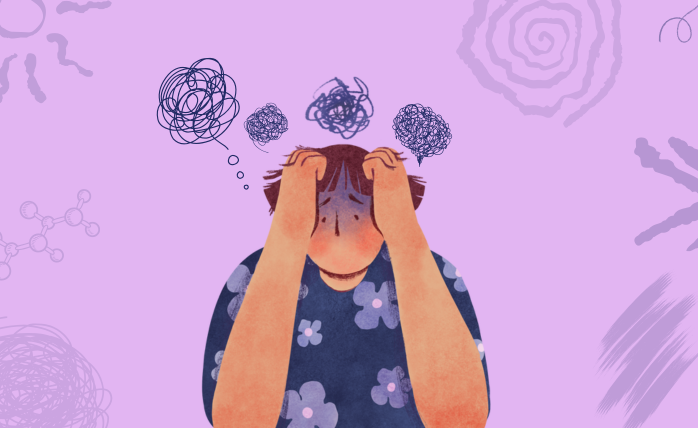
Keyword Focus: what causes overthinking in the brain
How Overthinking Sabotages Daily Life ?
She can’t enjoy lunch without stressing about calories. He can’t respond to a message without re-reading it five times. Overthinking isn’t a hidden talent—it hijacks everyday functionality.
Here’s how overthinking creeps into daily behaviors:
- Relationships: Reading too deeply into texts and actions leads to unnecessary arguments.
- Health: Overthinking meals causes decision fatigue, often resulting in poor dietary choices or eating disorders.
- Career: Perfectionism driven by overanalysis delays tasks and ruins confidence.
Overthinking doesn’t sharpen clarity—it blurs it. It removes people from the present and traps them in the hypothetical.
NLP entities used: healthy habits, mindful eating, workplace stress, mental fatigue
Keyword Focus: effects of overthinking
Why Smart People Overthink the Most ?
Interestingly, overthinking tends to plague high achievers. Why? Because smart individuals often rely on their mental faculties so heavily that they distrust instinct or emotion.
A 2023 meta-analysis in the Journal of Psychological Science revealed that individuals with higher IQs were more prone to overthinking because they overestimated the number of variables needed for decision-making.
Takeaway: Intelligence without emotional regulation becomes a self-built trap.
Overthinkers aren’t weak—they’re untrained. Without tools to manage their minds, their brilliance becomes burdensome.

Keyword Focus: overthinking and intelligence
The Illusion of Control: Why Overthinking Feels Safe.
People overthink not because they enjoy it, but because they associate it with control. If she plans every outcome, maybe nothing bad will happen. If he replays the past, maybe he can fix it.
In reality, overthinking is a trauma response. According to therapist Nedra Glover Tawwab, overanalysis is often rooted in childhood experiences where safety was unpredictable.
Control is comforting. But it’s also deceptive. It convinces people that planning replaces action, that worry equals preparation, and that fear is protection.
Keyword Focus: why people overthink
The Shift: How to Think Less and Do More.
Here’s the truth: overthinking doesn’t need more thinking—it needs interrupting. It’s a cycle, not a skillset. To break it, one must replace analysis with direction.
Evidence-Based Tools to Reduce Overthinking:
- The 5-Second Rule (Mel Robbins): Count down from 5 and take immediate action before doubt creeps in.
- Cognitive Defusion (ACT Therapy): Learn to observe thoughts, not absorb them.
- Scheduled Worry Time: Allocate a 10-minute window daily for worry. Outside of it, redirect thoughts.
- Daily Decision Limits: Limit trivial decisions like what to wear or eat. Use meal prep or outfit planning apps like Google Sheets templates for “healthy chicken meals” to avoid food-related decision fatigue.
Google Sheets SEO keywords used: healthy cooking, meal planning, chicken meal ideas, daily routine
The secret isn’t to silence the mind—it’s to redirect it.
Keyword Focus: how to stop overthinking
Turning Overthinking into Clarity, Not Chaos.
When she replaced her overthinking with structured reflection, she noticed results. Clarity. Calm. Confidence. The goal isn’t to think less—but to think better.
Practicing mindfulness, setting daily intentions, and making room for silence helps her think with purpose instead of panic. He finds that journaling clears mental clutter. They start living in the now—not in their imagined versions of tomorrow.
Overthinking is never about what happened—it’s about what they fear might happen. Mindfulness brings people back to what is actually happening.
Frequently Asked Questions (FAQ).
Q: Is overthinking a sign of intelligence?
A: Overthinking is common among intelligent people, but it’s not a sign of intelligence. In fact, unmanaged overthinking often leads to decision fatigue and burnout.
Q: Can overthinking be cured?
A: Overthinking isn’t a disease—it’s a habit. It can be managed and reduced through mindfulness, behavioral tools, and therapy.
Q: How do I stop overthinking small things?
A: Use techniques like the 5-second rule, limit daily decisions, and redirect focus to action over analysis. Tracking thoughts in a journal or spreadsheet (e.g., Google Sheets for stress triggers) can also help.
Q: Is there any benefit to overthinking?
A: Brief reflection is helpful. But chronic overthinking is harmful. Healthy reflection is structured and purposeful—overthinking is scattered and fear-driven.
Keyword Focus: benefits of mindfulness over overthinking

You Don’t Need to Think Harder—You Need to Think Smarter
She thought overthinking was her edge—but it was her anchor. They thought it made them prepared—but it made them stuck. The truth is clear: Overthinking is not your superpower—it’s your sabotage.
But here’s the best part: the mind that created the maze can also build the exit. Overthinking isn’t a life sentence. It’s a habit, and habits can be changed—with clarity, courage, and conscious redirection.
Ready to break the cycle of overthinking?
Start by taking one simple action today—journal your top three recurring thoughts, and label each as “helpful” or “harmful.” That single awareness shift could be the beginning of your mental freedom.
Share this article with someone who needs to hear this—and subscribe for more science-backed insights on mental clarity, wellness, and smart living.